As the nation marks its 250th birthday in 2026, Costa Mesa has its own story to tell about the last time America reached a milestone like this. Fifty years ago, as the country prepared to turn 200, this community didn’t simply celebrate — it organized, it innovated, and it inspired a generation of young people to engage with their history in ways that left a lasting mark. The photos and memories that follow are a reminder of what that looked like — and of the people who made it happen.
When America turned 200 in 1976, Costa Mesa didn’t just watch from the sidelines. The city formed its Bicentennial Committee in 1973, and by March 1974 had announced four ambitious objectives: immerse residents in their heritage, inspire youth, enlarge the city’s prestige, and spark conversation about Costa Mesa’s future.
By the time it was done, the committee had overseen 24 program categories and 28 separate events, touching nearly every corner of city life — and leaving behind stories that deserve to be emembered.
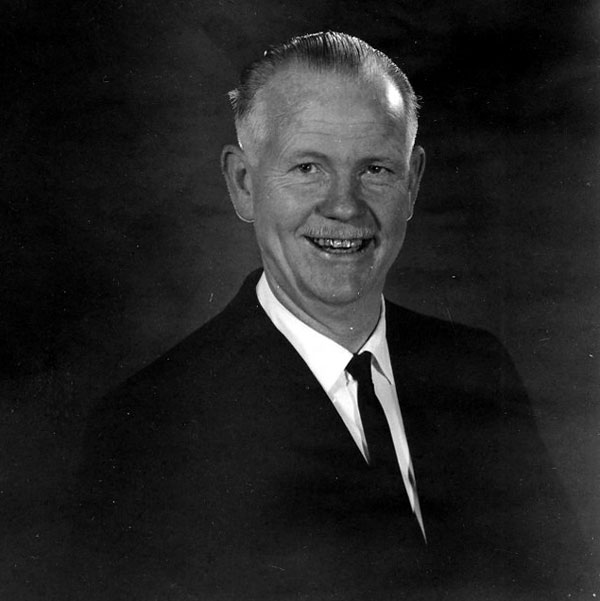
Mayor Alvin Pinkley: Mayor Alvin Pinkley, one of Costa Mesa’s most beloved civic figures, who served multiple terms on the City Council. In April 1975 he proclaimed Bicentennial Awareness Day, reflecting the city’s deep commitment to marking the nation’s 200th birthday.
Immersing the Community in Its Heritage
The committee’s first objective was to give every resident a “refresher course” in American and California history — and they pursued it on multiple fronts.
OCC History Professor Hank Panian wrote the Costa Mesa Bicentennial Gazette, an eleven-issue newsletter published in three volumes that traced events in California two hundred years ago alongside the American Revolution on the east coast, helping Costa Mesans gain insight into what the Gazette called their “twin heritage of Spanish and Anglo-American backgrounds.” Edrick Miller published a new Bicentennial edition of A Slice of Orange, the city’s history. An Orange County Historical Display of three dozen photographs of “old” Orange County traveled to two County Fairs in 1974 and 1975, as well as locations throughout the city.
Committee member Joan Morrow took a Bicentennial flag display — tracing the dozen flags important in U.S. history from the colonial period to the present, prepared by South Coast Plaza — into dozens of classrooms and public meetings. And four Bicentennial Lecture Series were presented at Orange Coast College, the most popular being a travel series that took participants to important historical sites throughout the county, each explained by a local expert.
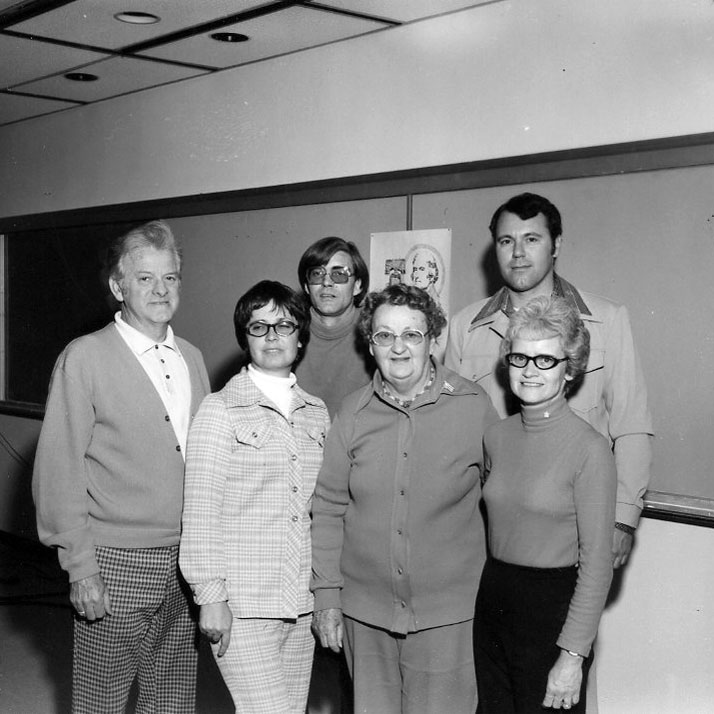
Committee members: Members of the Costa Mesa Bicentennial Committee, which operated from 1973 to 1976 under the chairmanship of Don Bull (rear row, right). Front row, left to right: Trudy Ohlig, Mildred Fisher, Joan Morrow. The committee’s own wrap-up report noted that at least 100 volunteers joined in to help complete each of its projects.
Inspiring Youth
The committee’s second objective — inspiring the next generation — produced some of its most memorable moments.
The Bicentennial Essay Contest invited high school juniors and seniors to write on the theme “How the Declaration of Independence Has Affected My Life.” The committee ran the contest in 1974, 1975 and 1976, and over those three years eight students — four each from Costa Mesa and Estancia High Schools — each received $500 and an individual trip to Washington, D.C.
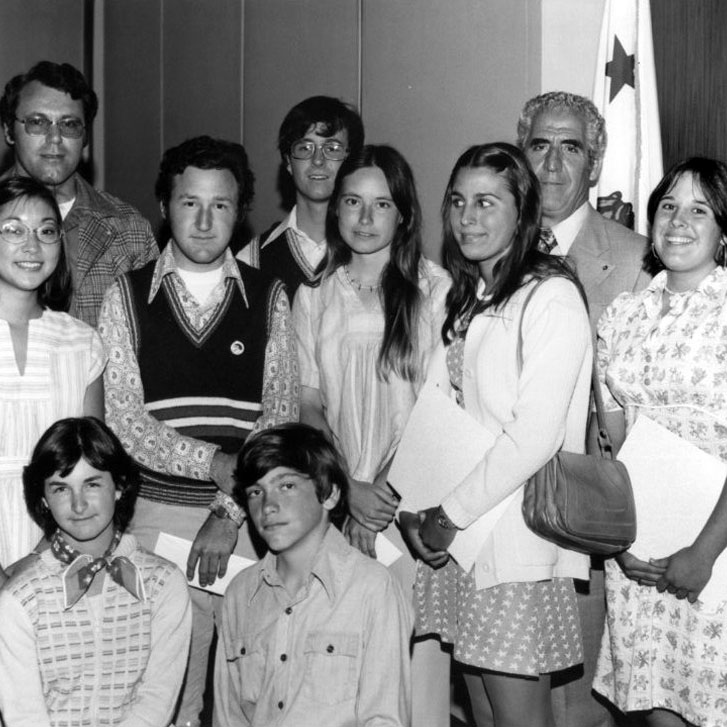
Essay contest entrants: Bicentennial essay contest entrants with Chairman Don Bull and Mayor Dom Raciti. Estancia winners over the three years included Jim Scott, Tom Pecoraro, Laurie Leenerts and Steve Tucker. Costa Mesa High School winners included Bruce Gensler, Lawrence Brownson, Noelle Naito and Rebecca Gunn.
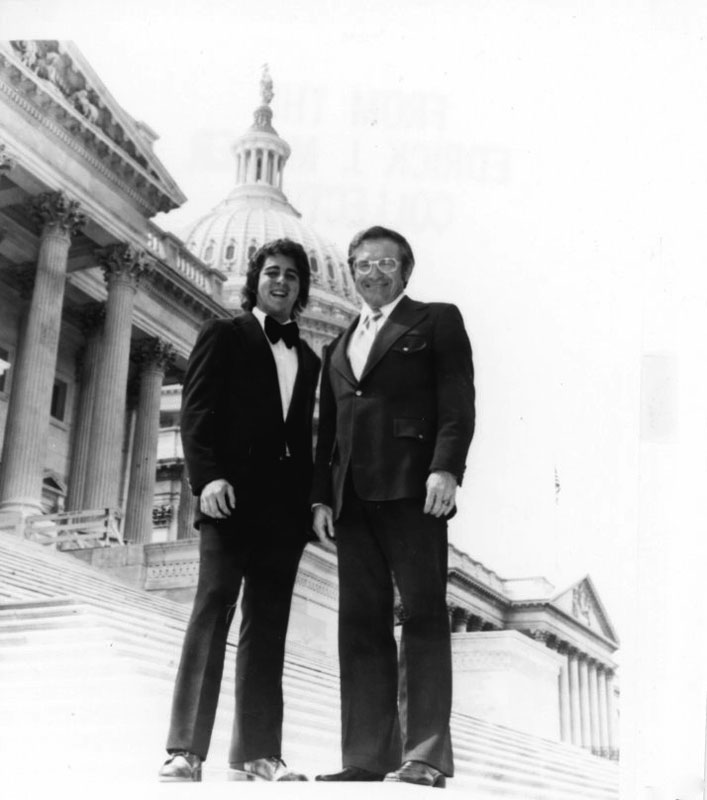
Jim Scott and Congressman Hinshaw: Estancia essay winner Jim Scott poses with Congressman Andy Hinshaw on the steps of the U.S. Capitol — one of eight Costa Mesa students who made the trip to Washington over the three years of the contest. Fellow Estancia winner Tom Pecoraro would later serve on the committee itself as one of five student representatives.
The committee also partnered with the OCC Art Department on a poster contest to advertise the Bicentennial Fine Arts Competition — a city-wide effort open to all Costa Mesa elementary school students. The winning poster was drawn by Ken Matteson of Costa Mesa. The Fine Arts Competition itself was judged by a committee headed by Estancia High School student Susan McCamont. Over 500 Certificates of Merit were awarded to young artists whose work was displayed at South Coast Plaza.
And then there were the fire hydrants.
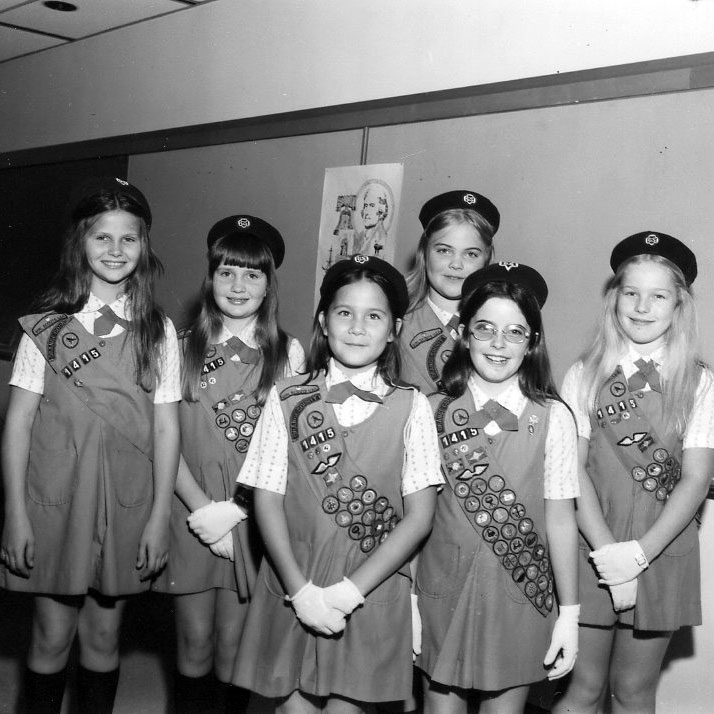
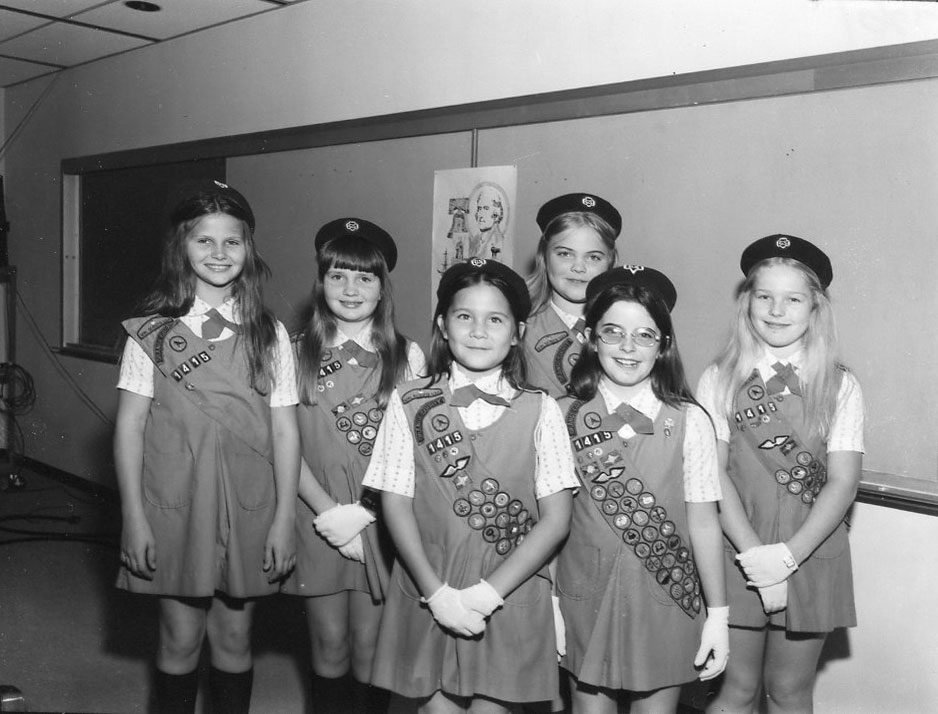
Girl Scouts: Girl Scout Troop 1415 poses after presenting their proposal to paint the city’s fire hydrants red, white and blue. After receiving approval from the Costa Mesa County Water District, the Fire Department and the City, bands of young girls supervised by adult leaders painted 600 hydrants throughout Costa Mesa — giving residents a daily reminder of the nation’s 200th birthday. “And perhaps more importantly,” the committee’s own wrap-up report noted, “children had the opportunity to participate directly in their only Bicentennial.”
Putting Costa Mesa on the Map
The committee’s third objective was to use the Bicentennial to enlarge Costa Mesa’s prestige and shape its future image — and it succeeded in ways that reached far beyond city limits.
Four consecutive Fourth of July fireworks shows beginning in 1973 at OCC’s LeBard Stadium drew an average of 6,000 people each. A local builder, Dennis Holland, constructed The Pilgrim — a 118-foot wooden vessel modeled after a 1774 Baltimore clipper — which was declared “California’s Bicentennial Ship” by the State American Revolution Commission in October 1975.
Most distinctively, Costa Mesa and Rutland, Vermont became the first pair of Bicentennial Sister Cities in the United States. OCC Professor Hank Panian traveled to Rutland to speak on “The California Connection,” bringing greetings from civic leaders and a copy of A Slice of Orange for the Rutland Free Library. Later, Panian represented Costa Mesa at ceremonies in both Paris — placing a floral wreath on the tomb of the Marquis de Lafayette in appreciation for France’s support during the American Revolution — and Dorchester, England, where Costa Mesa joined the Dorset County Council in reaffirming both nations’ commitment to the ideals of the Revolution.
Closer to home, the committee commissioned artist Thelma Paddock Hope to paint the Diego Sepulveda Adobe in oil — Costa Mesa’s permanent link to its Spanish past. The painting was placed in the lobby of City Hall for all to see.
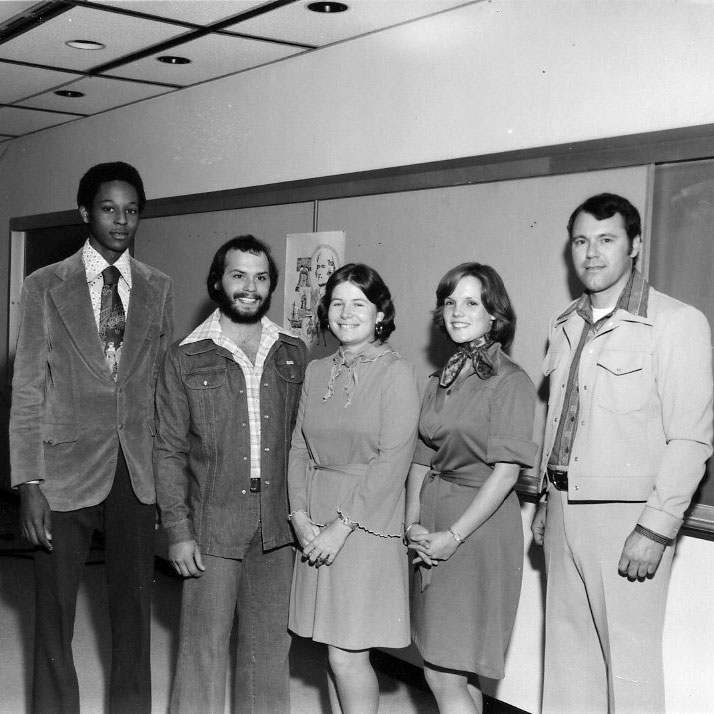
Award winners with Don Bull: Award recipients with Chairman Don Bull (right) at the committee’s final recognition event, held August 3, 1976 at the Polka Auditorium. The City Council presented Certificates of Appreciation to those who contributed to the overall program. Don Bull himself received a copy of From Tumbleweeds to Roses, the history of Orange Coast College, signed by OCC President Dr. Robert Moore and the committee members in attendance.
All of which brings us to one of the five student representatives who sat at that big conference table — Estancia High School Class of 1976 graduate Susan McCamont. She chaired the Fine Arts Competition committee, drove her mom’s orange Pinto to every elementary school in Costa Mesa, and learned something along the way about brainstorming, persistence, and the power of showing up. Here, in her own words, is what she remembers.
The Costa Mesa Bicentennial Committee – 1976
by Susan McCamont Matt
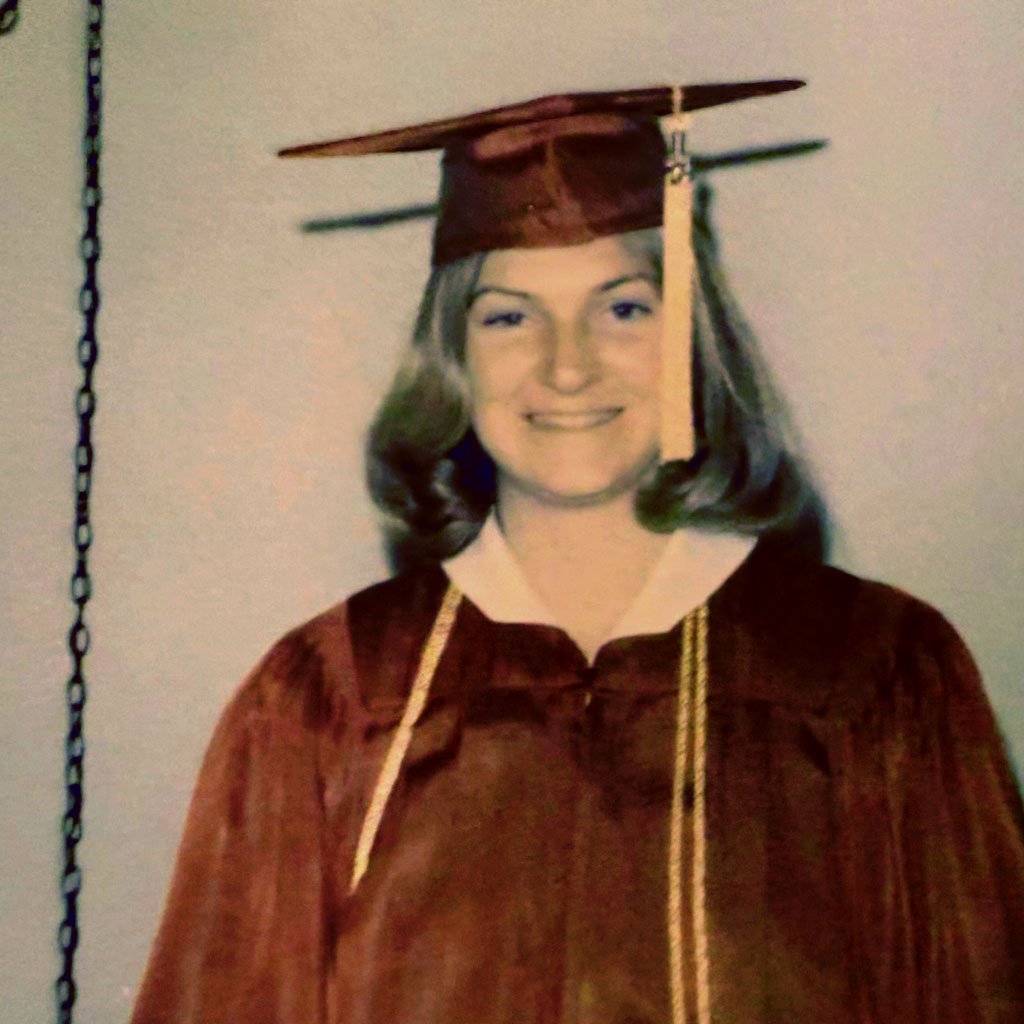
Certain memories stick in your head when, at the time they were made, you don’t realize they are a life lesson. For me, it is the private joke that always makes me laugh: “Yes, they’re all white, but they’re color-coded.”
Georgianna McLeod, our assistant principal of Activities at Estancia High School asked Ron Okada, Tom Pecoraro, Randy Porter, Cindy Yamaga and me to represent our graduating class of 1976 and sit on Costa Mesa’s Bicentennial Committee. I found in the City Council Minutes, dated April 1, 1975, “The Mayor (Alvin Pinkley) announced that the following committees will be retained … Bicentennial Committee with Don Bull serving as chairman.” He proclaimed April 18,1975 as Bicentennial Awareness Day.
My memories come back as scenes, and I mentally picture us sitting at a large conference table with various representatives from around the community. There was Ed Miller, historian who had written “A Slice of Orange” and [Dick Panassian] a friendly man who knew a lot about the city. One man represented the Fire Dept. There was a very old gentleman who reminisced how in 1928 there was no roadway from the Balboa Peninsula to Costa Mesa. He said you had to travel to Santa Ana and then back on another road to reach our city. In all, there were around 20 members, and the Chair was a very kind gentleman named Don Bull. I believe he was a realtor.
Our task was to come up with ways for our city to celebrate the nation’s 200th birthday. We considered proposals brought to us and we also worked to develop our own. Communities around the country were doing special things like painting their fire hydrants to look like minute men. A girl scout troop came before the committee, proposing to do just that and that’s when the man representing the Fire Department hooked his thumbs under his lapels and announced, “You can’t do that because our fire hydrants are all color-coded.” A woman on the committee said, “I thought they’re all white.” He responded, “Yes, but they’re color-coded.” As we high schoolers stifled snickers, the girl scouts left the room, crestfallen.
Shooting down a proposal was a rarity on the committee and to me, some should have been, but Don Bull was polite and patient with all. One man came to sell us pewter Revolutionary War figurines he had cast. When asked what we were to do with them, he said we could be set up in a battle scene at the City Hall or perhaps a library. To me, this seemed like a bold attempt to separate the city from its money, but Don Bull took it into consideration, thanked him and we later discussed it and voted it down. In hindsight, I realize that he was obeying one of the key tenets of brainstorming: to defer judgment and avoid criticizing or evaluating ideas in the moment; no idea is considered bad. Ideas often generate other ideas, and we were there to generate ideas for the Bicentennial celebration. Later they could be culled.
My idea started out as a simple one. How about a coloring page to make the elementary school kids aware of the Bicentennial? I recalled seeing a Disney drawing of Mickey Mouse, Donald Duck and Goofy depicted as in Archibald Willard’s famous Spirit of ’76 painting. Don charged me to pursue it, so I reached out to Disney Studios to get the picture for our program.
They quickly responded with a refusal, that they did not share their art as such. It was my turn to be crestfallen as I reported my failure back to the Committee but someone with ties to Orange Coast College set up a meeting for me to meet with some faculty from the Art Department. I could ask them to have a student draw a picture to color to raise awareness of the Bicentennial, I thought. When I got there, three faculty members told me that they do not believe in coloring books. Students should be creating their own art, they explained and then they proposed an art contest. Then they proposed a poster contest at the college to announce the art contest. I could feel the panic welling up inside me.
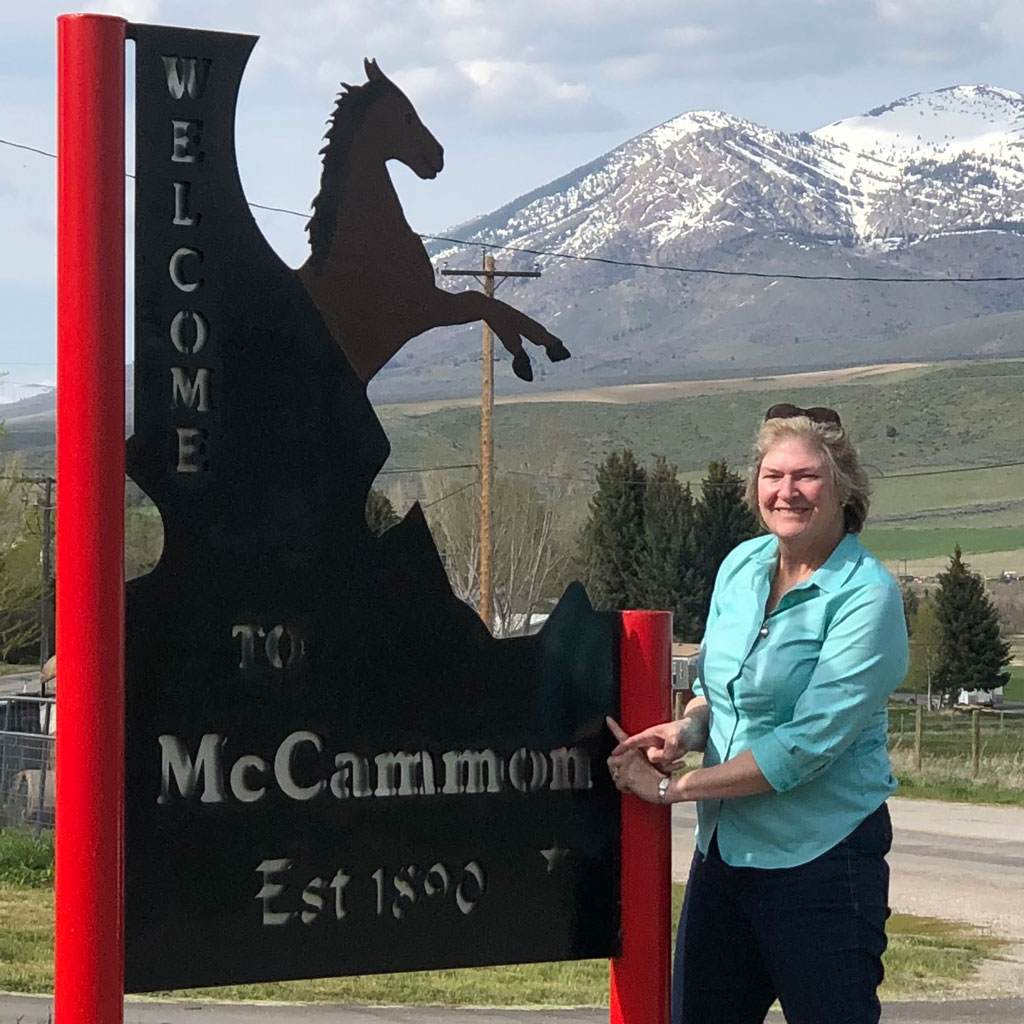
Here I was, busy in the latter part of my high school years with all the college admissions demands, and my project had suddenly expanded. To their credit, they took it and ran with it, and my involvement was to deliver the winning poster, which was quite nice, depicting the Liberty Bell, Independence Hall and Ben Franklin to the schools, along with instruction sheets to be distributed to each teacher. I drove my mom’s orange Pinto to each school in Costa Mesa where each receptionist in the admin office was friendly and ready to take the materials. OCC’s Art Dept. handled the adjudication, and I recall quite a few students participated. Now, as the mother of a child who excelled in art, I know how important opportunities are for young artists to have their creations displayed and recognized.
Reviewing Costa Mesa’s City Council minutes, there’s a budget allocation to Don Bull for a Bicentennial float for a parade. For us graduating seniors, we received a special red, white and blue tassel with a ’76 charm for our caps and a commemorative pin, designed by Ron Okada. He’s a talented artist and he drafted a stylized eagle with 1776-1976 on it.
That’s the final lesson that participating in Costa Mesa’s Bicentennial Committee imparted to me: the power of showing up. Ron had managed to pin Estancia’s mascot, the Eagle on all the graduating Mustangs at our rival, Costa Mesa High School.